 CORNERFLICK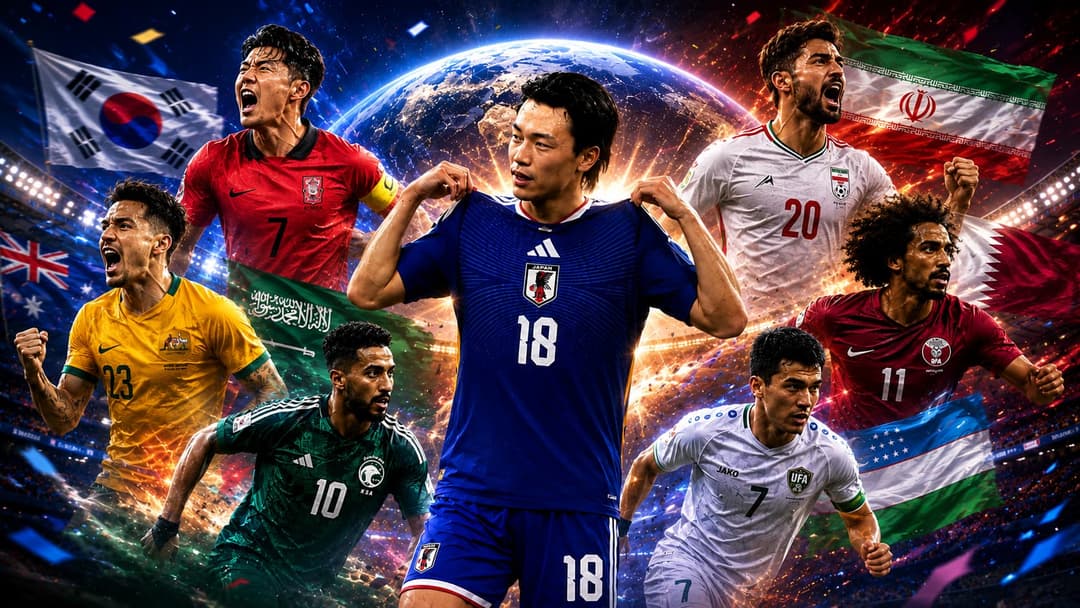
Asia's Best World Cup Start Yet?
For decades, Asian teams arrived at the FIFA World Cup hoping to surprise the football world.
In 2026, they arrived expecting to compete.
The first round of group-stage matches has delivered one of the strongest collective performances ever produced by Asian nations at a World Cup. While the traditional powers of Europe and South America remain among the favorites, the opening week has shown that the gap between Asia and football's elite may be smaller than ever.
Nine Asian teams entered the tournament.
Six avoided defeat.
And several produced results that few would have predicted a decade ago.
The message is clear:
Asian football is no longer chasing respect.
It is earning it.
South Korea Set the Tone
If there was one result that captured the confidence of Asian football, it was South Korea's 2-1 victory over Czechia.
The Koreans played with intensity, organization, and belief throughout the match. Rather than sitting back and hoping for opportunities, they took the initiative and were rewarded with three valuable points.
South Korea have a long history of punching above their weight on the World Cup stage, but this performance felt different.
It felt expected.
For a nation that has become a regular presence in European leagues and international tournaments, advancing from the group stage is no longer considered a dream.
It is becoming a standard.
Japan Continue to Raise the Bar
Japan's 2-2 draw against the Netherlands may end up being one of the most significant results of the opening round.
Facing one of Europe's most established football nations, Japan showed remarkable composure and tactical discipline.
At no point did they look intimidated.
The Japanese national team has spent years building a football culture focused on technical excellence, intelligent movement, and player development. That work is now producing a generation capable of competing with anyone.
A draw against the Netherlands was not celebrated as a shock.
It was viewed as proof of progress.
Saudi Arabia Show 2022 Was No Fluke
The football world remembers Saudi Arabia's stunning victory over Argentina at the 2022 World Cup.
Four years later, they continue to demonstrate that result was not simply a once-in-a-generation upset.
A 1-1 draw against Uruguay highlighted a team that is organized, confident, and increasingly comfortable against elite opposition.
Saudi football has invested heavily in infrastructure, youth development, and domestic competition over the last decade.
The rewards are becoming visible on the pitch.
Qatar and Iran Deliver Valuable Points
While victories attract headlines, draws can be equally important in a World Cup group stage.
Qatar earned a dramatic 1-1 draw against Switzerland, keeping their qualification hopes firmly alive.
The result reflected the growth of a football program that has gained invaluable experience since hosting the World Cup in 2022.
Iran also collected a point in a hard-fought 2-2 draw with New Zealand.
As always, Iran proved difficult to break down and impossible to underestimate.
Their resilience remains one of the defining characteristics of the team.
Australia Continue to Deliver
Australia's 2-0 victory over Turkey may have gone slightly under the radar, but it was one of the most impressive Asian performances of the opening round.
The Socceroos controlled key moments of the match and demonstrated the physicality and tactical maturity that have become hallmarks of Australian football.
For years, Australia have been one of Asia's most consistent World Cup representatives.
Nothing about this tournament suggests that will change.
Not Every Story Was Positive
The opening round was not perfect for the AFC.
Iraq suffered a 4-1 defeat against Norway.
Jordan lost 3-1 to Austria.
Uzbekistan fell 3-1 against Colombia.
Yet even these results tell part of the larger story.
A decade ago, several of these nations would not have been expected to reach the World Cup at all.
Today, they are competing on football's biggest stage.
The depth of Asian football continues to grow.
The Bigger Picture
Perhaps the most important takeaway from the first round is that there is no single model for success in Asia.
South Korea and Japan have benefited from exporting talent to Europe's biggest leagues.
Saudi Arabia and Qatar have invested heavily in domestic football development.
Iran continue to rely on tactical discipline and collective organization.
Australia blend European and Asian influences into a uniquely effective football identity.
Different paths.
The same destination.
Progress.
What Comes Next?
The opening round does not guarantee success.
The group stage remains long, difficult, and unforgiving.
The real challenge now is turning encouraging performances into qualification places.
Can South Korea maintain their momentum?
Can Japan convert strong displays into victories?
Can Saudi Arabia, Iran, Qatar, and Australia secure a place in the knockout rounds?
Those questions remain unanswered.
But one thing is already certain.
The first week of World Cup 2026 has delivered a powerful reminder that Asian football belongs on this stage.
The continent is no longer measured by occasional upsets.
It is being measured by consistent competitiveness.
And that may be the strongest sign yet that a new era of Asian football has arrived.
AFC Opening Matchday Record
🇰🇷 South Korea 2-1 Czechia ✅
🇯🇵 Japan 2-2 Netherlands 🤝
🇸🇦 Saudi Arabia 1-1 Uruguay 🤝
🇮🇷 Iran 2-2 New Zealand 🤝
🇶🇦 Qatar 1-1 Switzerland 🤝
🇦🇺 Australia 2-0 Turkey ✅
🇮🇶 Iraq 1-4 Norway ❌
🇯🇴 Jordan 1-3 Austria ❌
🇺🇿 Uzbekistan 1-3 Colombia ❌
Total: 2 Wins | 4 Draws | 3 Defeats
A strong opening chapter for Asian football at the 2026 FIFA World Cup.