 CORNERFLICK
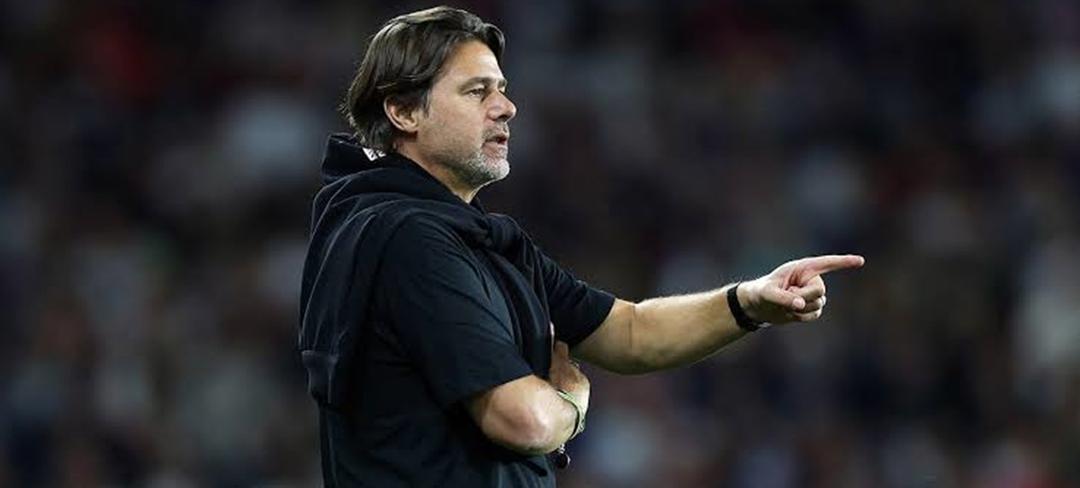
The appointment of Mauricio Pochettino as Manchester United's new manager, replacing Michael Carrick, has reignited a familiar debate: can the Argentine revive the fortunes of one of English football's biggest clubs, or will he become the latest manager to be dragged down by the seemingly endless turmoil at Old Trafford?
Pochettino's managerial record since taking charge of Tottenham Hotspur in 2014 is undeniably impressive. He fundamentally transformed the team's structure, introducing an aggressive, attack-minded philosophy built around intense high pressing.
At the time, his approach was far more distinctive than it would be in today's game. After a transitional first season that ended with a fifth-place finish, Tottenham's rise was both rapid and remarkable. From Mid-Table Contenders to Title Challengers From Pochettino's second season in charge, Tottenham finished in the Premier League's top three for three consecutive campaigns. During the first two of those seasons, Spurs emerged as genuine title contenders.
In 2015–16, Tottenham were Leicester City's most serious challengers in one of the most extraordinary title races in Premier League history.
The following season, although Chelsea ultimately claimed the championship, Spurs produced outstanding numbers. They scored 86 goals, more than any other team in the division, while conceding just 26, the fewest in the league.
Their home form was particularly remarkable. Tottenham went unbeaten throughout the campaign on their own ground, winning 17 of their 19 league matches and drawing the other two. Tottenham Played Football Worth Watching Pochettino's Tottenham were exciting, adventurous and immensely entertaining. The Argentine was the driving force behind that transformation, establishing himself as one of the most highly regarded young managers in European football.
That reputation has endured and largely explains why some of the game's biggest clubs subsequently turned to him.
However, the situation began to deteriorate when Tottenham became the first club in Premier League history to go through two consecutive transfer windows without signing a single player.
Had the club provided greater backing in the transfer market, Pochettino might well have remained in charge after guiding Spurs to the 2019 Champions League final. A Remarkable Champions League Final Appearance Reaching the Champions League final against the odds remains one of the defining achievements of Pochettino's managerial career.
It was an extraordinary accomplishment, particularly given that Harry Kane missed much of the knockout stage through injury.
Tottenham's remarkable European journey ultimately ended in disappointment, however, as Liverpool secured a 2–0 victory in Madrid.
Results and performances subsequently declined, and the final 18 months of Pochettino's tenure bore little resemblance to the club's golden period under his leadership. A Less Convincing Record After Tottenham Since leaving Spurs, Pochettino has struggled to replicate the success and widespread acclaim he enjoyed in north London.
At Paris Saint-Germain, he won two major trophies: the Coupe de France in 2020–21 and the Ligue 1 title in 2021–22.
Yet arguably more significant than those triumphs was his failure to win the French league in his first season.
Despite possessing a squad packed with world-class talent, PSG finished second behind Lille in the 2020–21 campaign.
For a club accustomed to domestic dominance, it represented a considerable disappointment. A Project Destined to Fail? Pochettino inherited an attacking line featuring Neymar and Kylian Mbappé during his first season in Paris, before Lionel Messi arrived the following summer.
Given the demands of his high-intensity, pressing-based philosophy, there was always a question over whether such a star-studded frontline could adapt to his tactical expectations.
In that respect, the project may have been fundamentally flawed from the outset.
Winning trophies with a squad of that calibre was certainly expected, but Pochettino still deserves recognition for delivering silverware.
Nevertheless, he also oversaw one of PSG's rare failures to secure the Ligue 1 title during an era of overwhelming domestic superiority. Why His Time at Chelsea Is Difficult to Judge Drawing definitive conclusions from Pochettino's solitary season at Chelsea is considerably more difficult.
The club was undergoing sweeping changes, both on and off the pitch, while the Argentine's previous association with Tottenham made it difficult for him to win over sections of the Stamford Bridge fanbase.
The circumstances were far from ideal and ultimately contributed to his departure.
Even so, Pochettino delivered a respectable sixth-place finish in the Premier League while working with what was, at the time, the fourth-youngest team in the competition's history.
That side has since dropped to sixth in the historical ranking of the league's youngest teams, while Pochettino's Tottenham squad from his first season ranks ninth.
Considering the inexperience of the Chelsea squad and the instability surrounding the club, his achievements arguably deserve greater credit than they initially received. Did Pochettino Really Deserve to Be Sacked? Despite Chelsea's encouraging finish, performances throughout much of the season were inconsistent.
The Blues had no European football to contend with and had invested heavily in new players during the summer, raising expectations considerably.
One particularly troubling issue was the team's lack of discipline.
Under Pochettino, Chelsea set a new Premier League record for disciplinary sanctions in a single campaign, accumulating 105 yellow cards and four red cards.
Although the Argentine ended his tenure with five consecutive victories, deeper problems remained apparent.
There were genuine signs of progress in May, suggesting that Pochettino was beginning to establish a more coherent identity within the squad.
However, the damage caused by earlier inconsistencies, disciplinary concerns and the club's wider instability had already taken its toll.
His departure, therefore, appeared increasingly inevitable, despite the late improvement in results. Can Pochettino Succeed Where Others Have Failed at Manchester United? Pochettino's managerial career presents a fascinating contradiction.
At Tottenham, he demonstrated an exceptional ability to develop young players, establish a clear tactical identity and transform an ambitious but inconsistent side into genuine contenders.
Yet his subsequent spells at Paris Saint-Germain and Chelsea exposed the difficulties of implementing that philosophy within clubs facing enormous expectations and complicated internal dynamics.
Manchester United represent another formidable challenge.
The Argentine's success will depend not only on his tactical expertise but also on whether the club can provide the stability, recruitment strategy and long-term backing that were often missing during his previous appointments.
His achievements at Tottenham suggest he possesses the qualities required to rebuild a struggling giant.
But his experiences in Paris and west London also offer a warning: managerial talent alone is rarely enough to overcome structural problems.
For Manchester United, the central question is not simply whether Pochettino is the right manager.
It is whether the club can finally create the conditions in which the right manager has a realistic chance of succeeding.