 CORNERFLICK
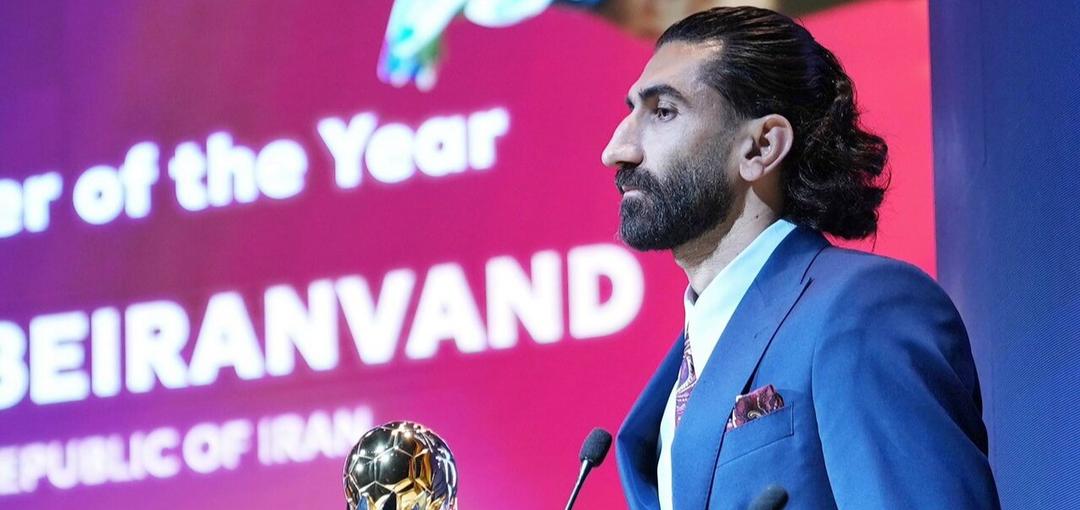
BANGKOK — It was a night of celebration for Iranian football. The 30th edition of the AFC Annual Awards concluded with two major achievements for Iran, as Alireza Beiranvand was named Asian Men's Player of the Year and Marziyeh Jafari retained her title as Women's Coach of the Year for the second consecutive year, making Iran one of the ceremony's standout nations.
The annual Asian Football Confederation (AFC) Awards ceremony was held on Thursday, November 19, in Bangkok, Thailand. Now in its 30th edition, the event remains one of the most prestigious occasions on the Asian football calendar, recognising outstanding performances by players, coaches, national associations and other contributors to the game across 19 award categories.
The biggest moment of the evening for Iran came when Alireza Beiranvand was announced as Asian Men's Player of the Year. The goalkeeper, who represents the Iranian national team and domestic club Tractor FC, finished ahead of two Saudi Arabian stars, Salem Al-Dawsari and Firas Al-Buraikan, to claim one of the continent's most prestigious individual honours.
The significance of Beiranvand's achievement goes well beyond the personal recognition. He became the first goalkeeper since the award was established in 1994 to receive the Asian Men's Player of the Year title. He is also the fifth Iranian footballer to win the honour, following in the footsteps of Khodadad Azizi, Ali Daei, Mehdi Mahdavikia and Ali Karimi.
Beiranvand's performances for Tractor FC and the Iranian national team, particularly his influential displays in international competitions, played a key role in securing the award. His success also challenged the conventional view that individual football honours are largely reserved for attacking players, demonstrating that goalkeepers can reach the very top through consistency, quality and outstanding performances.
Iran also enjoyed considerable success in the coaching categories. Marziyeh Jafari, head coach of Iran's women's national team, was named AFC Women's Coach of the Year for the second consecutive year. Retaining the award represents a significant achievement and reflects the growing recognition of women's football in Iran. Despite ongoing infrastructure and financial challenges, the women's game continues to demonstrate considerable talent and potential.
Elsewhere, North Korea's Kim Kyong-yong was named Women's Player of the Year, while Japanese coach Go Kuroda, who manages Machida Zelvia, received the Men's Coach of the Year award. South Korea's Lee Kang-in won the Men's International Player of the Year award, while Australia's Caitlin Foord was recognised as Women's International Player of the Year.
In futsal, Thailand's Osamanmusa received the award for Best Futsal Player. The AFC Diamond of Asia Award was also presented posthumously to Lim Kia Tong, the former president of the Football Association of Singapore.
From an analytical perspective, Iran's achievements in Bangkok represent much more than two individual awards. Beiranvand's victory brought Iran back to the forefront of Asian football's individual honours after a 22-year gap. Meanwhile, Jafari's consecutive success demonstrated that Iran's footballing potential extends well beyond the men's game.
However, the real challenge for Iranian football is to turn these individual achievements into sustainable, long-term success. Investment in infrastructure, youth development, stronger domestic leagues and greater support for women's football will be essential if Iran is to maintain and strengthen its position in Asian football.
For Iran, the Bangkok ceremony will be remembered as a remarkable night — one in which Beiranvand and Jafari took centre stage and brought international recognition to Iranian football. Yet maintaining that position will require more than individual brilliance. It will depend on long-term planning, institutional support and meaningful structural reform across the country's football system.