 CORNERFLICK
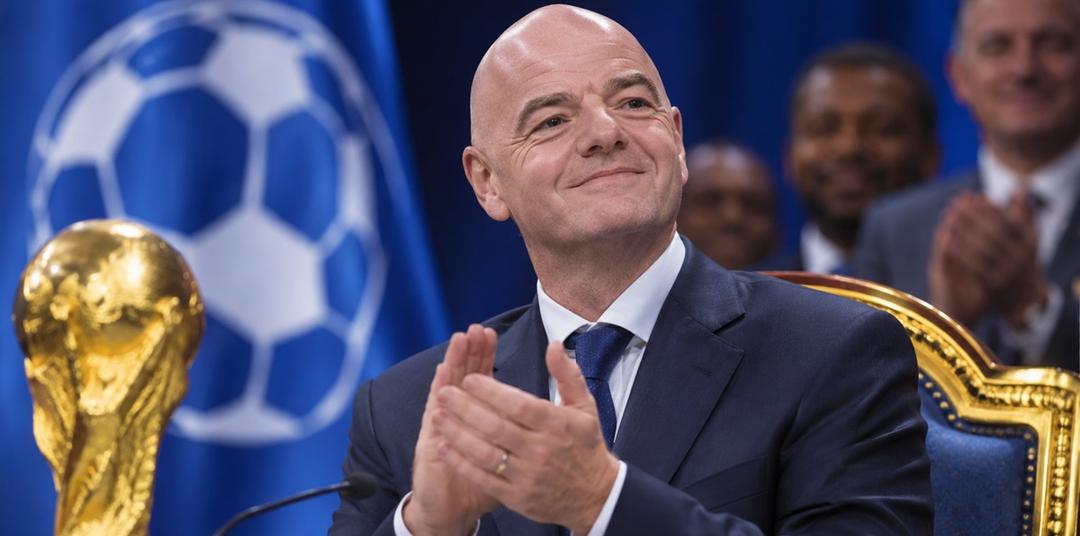
Despite mounting criticism of Gianni Infantino’s leadership of FIFA, the incumbent president appears to face few significant obstacles in his bid to remain at the helm of world football’s governing body.
According to Corner Flick, the reported backing of more than 180 national football associations has significantly strengthened Infantino’s prospects of securing a landslide victory in the 2027 FIFA presidential election.
With less than five months remaining until FIFA’s presidential election, Gianni Infantino has further consolidated his position among the organisation’s member associations.
According to French broadcaster RMC Sport, the current FIFA president has secured the support of more than 180 of the governing body’s 211 member associations, giving him an overwhelming advantage over any potential challengers.
The election is scheduled to take place on March 18, 2027, in Rabat, Morocco, with projections suggesting that Infantino could receive more than 85 per cent of the votes cast at the FIFA Congress.
Infantino Holds Commanding Lead Over Potential Rivals
Under FIFA’s electoral rules, a candidate needs at least 106 votes to secure victory in the first round. Infantino’s reported support already exceeds that threshold by more than 74 votes, placing him in an exceptionally strong position ahead of the election.
Such a substantial advantage leaves his opponents with little realistic prospect of mounting a successful challenge.
Even if every national association yet to declare its support for Infantino were to unite behind an alternative candidate, overturning his commanding lead would remain highly unlikely.
Why Are National Football Associations Backing Infantino?
One of the main factors behind Infantino’s electoral strength is believed to be his approach to developing football worldwide.
His administration has expanded opportunities for smaller footballing nations to participate in major international competitions while increasing FIFA’s financial assistance to member associations.
These initiatives have played a significant role in securing support from federations that have benefited from greater investment and broader access to international football.
According to the French report, Infantino enjoys particularly strong backing across Africa, South America and the Middle East.
He has also reportedly secured the support of a substantial majority of national associations in Asia and Oceania, further reinforcing his dominance across FIFA’s global membership.
European Opposition Struggles to Find a Unified Challenger
Meanwhile, opposition to Infantino, particularly among European football officials, has struggled to translate into a coordinated electoral challenge.
With the November 18, 2026, deadline for submitting presidential candidacies approaching, his critics have yet to agree on a single candidate capable of attracting sufficient support to challenge the incumbent.
The situation has become even more difficult following reports that Arsène Wenger, the former Arsenal manager and FIFA’s Chief of Global Football Development, is unwilling to enter the presidential race.
Wenger’s reported reluctance has further weakened hopes of assembling a credible opposition campaign against Infantino.
Despite continued criticism of his leadership and governance, Infantino’s extensive support among national football associations suggests that he remains the overwhelming favourite to retain the presidency of world football’s most powerful governing body.
Unless there is a dramatic shift in the electoral landscape, the 2027 FIFA presidential election appears increasingly likely to deliver another decisive victory for the incumbent.