 CORNERFLICK
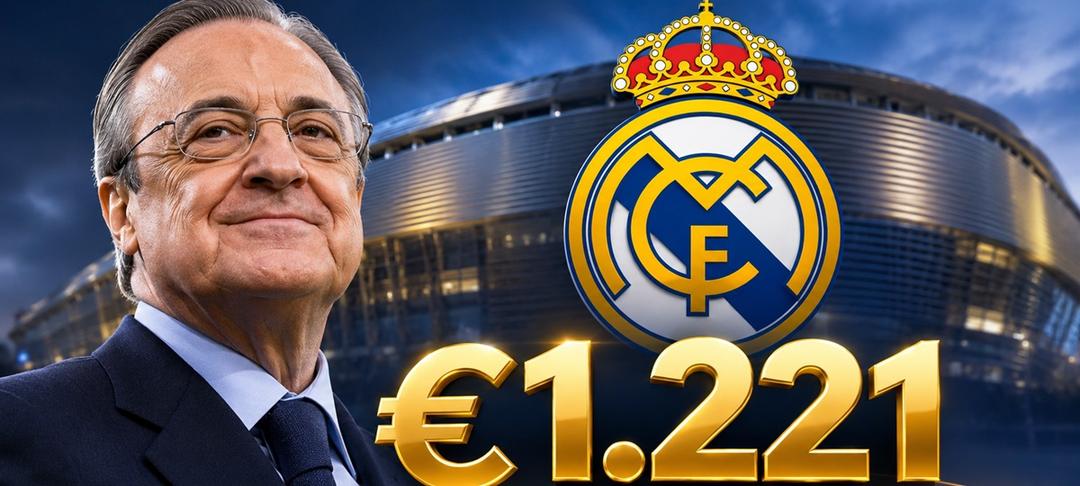
Real Madrid have built a financial model that significantly reduces their dependence on football-related revenue and results on the pitch.
According to Football 360, Real Madrid, under the leadership of Florentino Pérez, have developed a business model that has dramatically reduced the club’s reliance on sporting success and revenue distributed by football’s governing bodies.
According to the club’s latest financial figures and analysis by leading Spanish media outlets, approximately 74% of Real Madrid’s operating revenue now comes from commercial activities linked to the club’s global brand and the Santiago Bernabéu Stadium. Only 26% is generated through broadcasting rights and competitions.
This fundamental transformation is the result of more than two decades of long-term strategic planning under Pérez.
Record-Breaking Revenue
Real Madrid’s operating revenue, excluding player transfers, reached a historic €1.221 billion in the latest financial period, marking the first time a sports organisation has surpassed the €1.2 billion threshold.
The figure represents a 3.1% increase on the previous season, keeping the Spanish giants at the forefront of world football in terms of revenue generation.
Since the 2018–19 season, the final campaign before the Bernabéu redevelopment began, the club’s revenue has increased by 61%, rising from €757 million to €1.221 billion.
Remarkably, 93% of that €464 million increase has come from revenue streams directly controlled by the club.
Commercial revenue rose by €243 million, climbing from €296 million to €539 million, while stadium-related income increased by €188 million, from €175 million to €363 million — a remarkable rise of 107%.
By comparison, revenue from broadcasting rights and competitions increased by just €33 million over the same period.
The Bernabéu Transformation
The €1.4 billion redevelopment of the Santiago Bernabéu has been at the heart of Real Madrid’s financial transformation.
Stadium-related revenue has now more than doubled compared with pre-renovation levels, driven by ticket sales, premium hospitality and VIP facilities, stadium tours, commercial experiences and non-football events, including NFL games.
The club expects stadium revenue to reach approximately €420 million during the current financial year.
Meanwhile, Real Madrid’s commercial operations have continued to expand, supported by major sponsorship renewals with Adidas and Emirates, alongside agreements with new commercial partners.
This diversified revenue structure has allowed the club to maintain financial stability even during seasons when performances on the pitch have fallen below expectations.
Financial Independence: Pérez’s Long-Term Vision
A central element of Florentino Pérez’s strategy has always been to ensure that Real Madrid can generate the majority of their revenue independently, rather than relying heavily on financial distributions from FIFA, UEFA, La Liga or the Spanish Football Federation.
The result is a club with greater financial autonomy and significantly reduced exposure to fluctuations in sporting performance or decisions made by external governing bodies.
This independence enables Real Madrid to pursue long-term investment in infrastructure, squad development and commercial expansion with greater financial security.
Although football remains the driving force behind the club’s global appeal, the commercial ecosystem built around it has substantially reduced the financial impact of short-term results.
Under Pérez, Real Madrid have evolved into far more than a football club competing for trophies. They have become a global sporting and commercial powerhouse, demonstrating how strategic brand management, infrastructure investment and diversified revenue streams can deliver long-term financial sustainability.
The Spanish giants' financial transformation offers a compelling blueprint for modern football clubs seeking to combine sporting ambition with economic independence.