 CORNERFLICK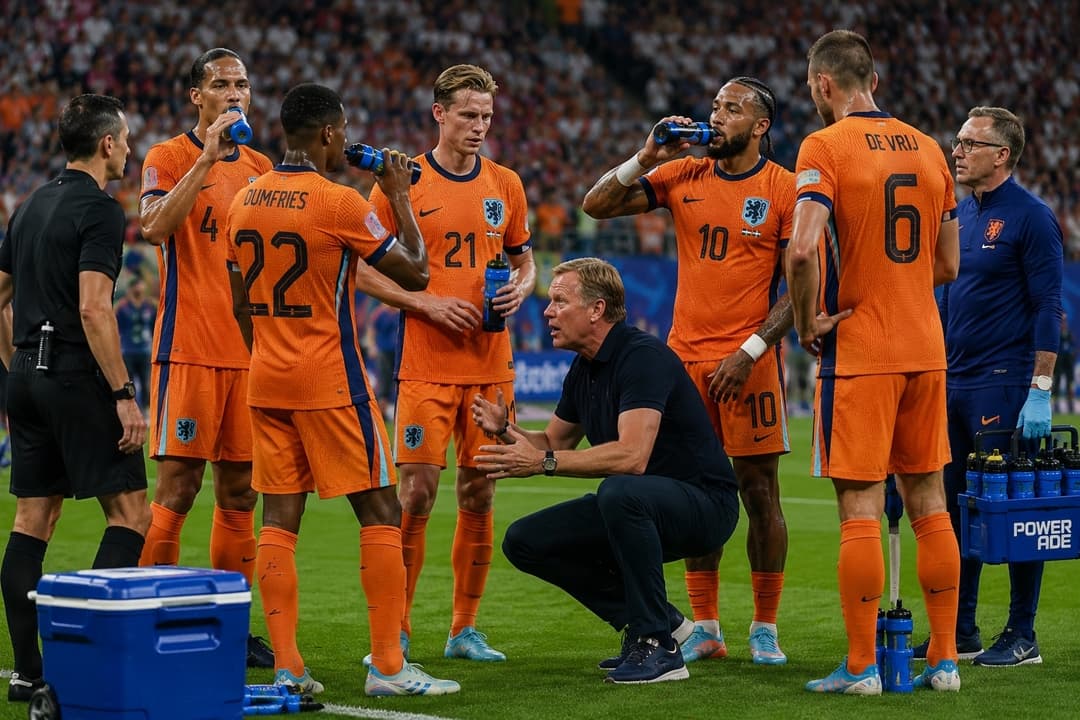
Is FIFA Turning Football Into the NFL? The Bigger Story Behind World Cup 2026 Hydration Breaks
FIFA’s mandatory hydration breaks have sparked a debate about player welfare, tactics, broadcasting, and the future of football.
The 2026 FIFA World Cup will be remembered for many reasons. It is the first World Cup to feature 48 teams, the first to be hosted by three nations, and the largest tournament in football history with 104 matches scheduled across the United States, Canada, and Mexico.
Yet one of the most discussed changes has nothing to do with the expanded format.
FIFA’s decision to introduce mandatory hydration breaks in every match has created a debate that goes far beyond player welfare. Supporters view the rule as a necessary response to modern football’s increasing physical demands. Critics see something different: another step toward a more commercialized version of the game.
The discussion has quickly evolved into a broader question.
Is football beginning to adopt elements traditionally associated with American sports?
What Are the New Hydration Break Rules?
For the 2026 FIFA World Cup, referees are instructed to stop play once in each half for a mandatory three-minute hydration break.
In previous tournaments, cooling breaks were generally reserved for extreme weather conditions. The 2026 edition is different. Every match receives the same treatment regardless of temperature, stadium design, or local climate conditions.
Officially, FIFA says the policy is designed to protect players.
With matches spread across dozens of venues and varying weather conditions, governing bodies have argued that additional recovery periods are necessary to reduce physical stress and support player welfare throughout a demanding month-long competition.
From a health perspective, the reasoning appears straightforward.
Modern football is faster, more intense, and physically demanding than ever before.
Players routinely cover more distance, perform more high-intensity sprints, and compete in increasingly congested schedules than previous generations.
Why FIFA Believes the Rule Is Necessary
Football’s calendar has become one of the most debated issues in the sport.
Elite players can now participate in domestic leagues, domestic cups, continental competitions, international qualifiers, Nations League matches, Club World Cups, and major international tournaments within the same season.
Many coaches and players have repeatedly warned about excessive workloads.
The introduction of hydration breaks can therefore be viewed as part of FIFA’s wider effort to address growing concerns around player fatigue and injury risk.
Sports scientists have long argued that even short recovery periods can help maintain performance levels, particularly during tournaments where recovery time between matches is limited.
From this perspective, the decision is not revolutionary.
It is a practical adjustment designed to protect athletes competing at the highest level.
The Critics Have a Different View
Not everyone is convinced.
Football has traditionally distinguished itself from many other major sports through its continuous flow. Unlike American football, basketball, or baseball, the game rarely stops for scheduled interruptions.
For many fans, that uninterrupted rhythm is one of football’s defining characteristics.
Mandatory hydration breaks change that dynamic.
Every match now contains two planned stoppages, effectively dividing each half into smaller segments.
Critics argue this alters the natural flow of the game and creates artificial interruptions that can influence momentum.
A team dominating possession may lose its rhythm.
A struggling team may gain an opportunity to regroup.
Managers suddenly have additional moments to deliver tactical instructions.
The concern is not simply about three minutes of rest.
It is about how those three minutes could influence the competitive balance of matches.
The Tactical Impact on Modern Football
One of the most interesting aspects of the hydration break debate is its tactical significance.
Elite football increasingly resembles a chess match played at high speed.
Small adjustments often determine outcomes.
Hydration breaks provide coaches with something they rarely receive during open play: time.
Instead of shouting instructions from the touchline, managers can gather players together and communicate directly.
Defensive structures can be reorganized.
Pressing triggers can be adjusted.
Formation changes can be explained in detail.
Substitution plans can be discussed before they happen.
Some analysts believe hydration breaks could become one of the most important tactical variables of the tournament.
In close matches, a three-minute coaching opportunity may prove almost as valuable as a halftime team talk.
That possibility has raised concerns among traditionalists who believe football should remain as uninterrupted as possible.
The Broadcasting Question
While player welfare dominates FIFA’s messaging, much of the public discussion has focused on broadcasting.
The reason is simple.
Hydration breaks create additional inventory.
For decades, football broadcasters relied primarily on halftime for major advertising opportunities.
Unlike sports built around commercial breaks, football offered relatively few opportunities for advertisers during live play.
The 2026 World Cup changes that equation.
With two mandatory stoppages in every match, broadcasters gain additional windows that can be used for advertising, sponsorship integration, studio analysis, or promotional content.
This development has attracted significant attention from media analysts.
Although FIFA has not publicly linked hydration breaks to commercial objectives, the additional broadcast inventory carries undeniable economic value.
For broadcasters paying billions of dollars for media rights, every additional advertising opportunity matters.
Is Football Becoming More Like American Sports?
The comparison with American sports has become unavoidable.
The NFL, NBA, NHL, and MLB all incorporate structured stoppages that allow broadcasters to monetize live events more effectively.
Football has historically resisted that model.
Its uninterrupted nature has been one of its greatest strengths.
However, football is also becoming an increasingly global entertainment product.
Broadcast revenues continue to rise.
Commercial partnerships continue to expand.
Digital platforms demand new forms of content and engagement.
Against that backdrop, hydration breaks have become symbolic of a larger transformation.
Some observers believe they represent a practical health measure.
Others see them as evidence that football is gradually moving toward a more media-driven structure.
The truth may lie somewhere between those positions.
How Previous World Cups Handled Similar Situations
Cooling breaks are not entirely new.
FIFA has occasionally implemented them during tournaments played in extreme temperatures.
The difference in 2026 is consistency.
Instead of being reserved for exceptional circumstances, the breaks have become a standard feature of every match.
That distinction is significant.
Temporary weather-related measures are generally accepted by supporters.
Permanent structural changes receive much greater scrutiny.
Because of this, the 2026 World Cup may serve as an important test case.
If the system works smoothly, future tournaments and competitions could consider similar approaches.
If backlash grows, governing bodies may face pressure to reconsider.
Could Hydration Breaks Change Football Permanently?
The answer depends largely on how players, coaches, broadcasters, and fans respond throughout the tournament.
If hydration breaks are viewed as beneficial for player welfare without significantly disrupting the spectacle, they may become part of football’s future.
If they are perceived as primarily commercial tools, resistance could intensify.
Football has always evolved.
The back-pass rule, VAR, goal-line technology, and five substitutions were all controversial when first introduced.
Some changes transformed the sport permanently.
Others remained divisive.
Hydration breaks now join that list.
Conclusion
FIFA insists that mandatory hydration breaks at the 2026 World Cup are designed to protect players in an increasingly demanding sport.
That argument is difficult to dismiss.
At the same time, the commercial opportunities created by scheduled stoppages cannot be ignored.
The debate surrounding hydration breaks ultimately reflects a broader challenge facing modern football: balancing player welfare, competitive integrity, fan experience, and commercial growth.
Whether these breaks become a long-term feature of elite football remains to be seen.
But one thing is certain.
The discussion is no longer just about water.
It is about where football is heading next.