 CORNERFLICK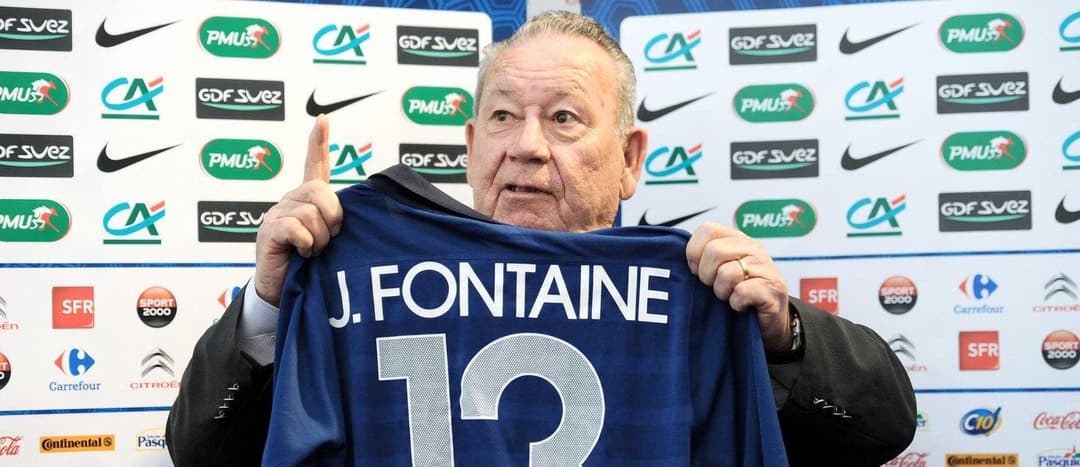
Few records in football have stood the test of time quite like Just Fontaine’s 13 goals in a single FIFA World Cup. Set in Sweden in 1958, the French striker’s remarkable feat has survived for nearly seven decades despite the evolution of the modern game. With Lionel Messi enjoying another prolific World Cup campaign and rewriting the tournament’s scoring history, the question has resurfaced: is Fontaine’s record finally under threat?
Messi has enjoyed a sensational start, scoring six goals in his opening three matches and once again demonstrating why he remains one of football’s greatest players. His latest goals also saw him move past Miroslav Klose’s tally of 16 World Cup goals, taking his overall total to 19 and making him the competition’s all-time leading scorer. Kylian Mbappé is not far behind with 18 goals. Yet even their extraordinary numbers still leave Fontaine’s single-tournament record untouched.
Ironically, Fontaine was never expected to become the star of the 1958 World Cup. He was not a guaranteed starter for France and only secured a place in the lineup after René Bliard suffered an injury. Even more remarkably, Fontaine had undergone knee surgery just months before the tournament and raced against time to regain full fitness.
His journey to Sweden became even more extraordinary when his only pair of football boots tore during the final training session before France’s opening match. Believing his World Cup dream was over, Fontaine was rescued by teammate and direct rival Stéphane Bruey, who generously handed over his own boots. That simple act became one of the most memorable stories in World Cup history.
What followed was a scoring streak unlike anything football has witnessed since. Fontaine netted three goals against Paraguay, two against Yugoslavia and one against Scotland during the group stage. He then added two more in the quarter-finals, one in the semi-finals and four in the third-place playoff, finishing the tournament with an astonishing 13 goals in just six matches.
The football of the 1950s was vastly different from today's game. Teams played with far more attacking formations, defensive structures were less compact and sophisticated, and forwards enjoyed significantly more space in dangerous areas. Man-to-man marking was common, allowing intelligent strikers like Fontaine to exploit defensive gaps through clever movement. At the same time, however, the physical demands were immense. There were no substitutions, meaning players had to complete every match unless they suffered a serious injury.
Modern football offers a completely different challenge. Tactical discipline, organized defensive systems and limited attacking space have made goals considerably harder to come by. Although today's expanded World Cup format allows finalists to play more matches, elite forwards are also rotated more frequently, making a 13-goal campaign increasingly unlikely.
Fontaine himself never believed his record would be easy to surpass. Until his death in 2023, he often joked that archaeologists might one day discover an ancient mummy whose first question would be whether Fontaine still held the World Cup scoring record. Behind the humor, however, he maintained that scoring 13 goals in a single tournament was an extraordinary achievement that would be incredibly difficult to match.
Several legendary strikers have come close, but none has broken the barrier. Hungary’s Sándor Kocsis scored 11 goals in 1954 before Fontaine raised the standard even higher. Since then, Gerd Müller came closest with 10 goals in 1970, while Eusébio, Ronaldo and Mbappé all produced outstanding tournaments without threatening the record.
While the expanded World Cup creates more opportunities for today's stars, statistical models still rate the chances of any player scoring 13 or more goals in a single tournament as extremely slim. Yet football has repeatedly reminded us that no record lasts forever. Whether Lionel Messi, Kylian Mbappé or another future superstar eventually rewrites history remains one of the sport's most compelling questions.