 CORNERFLICK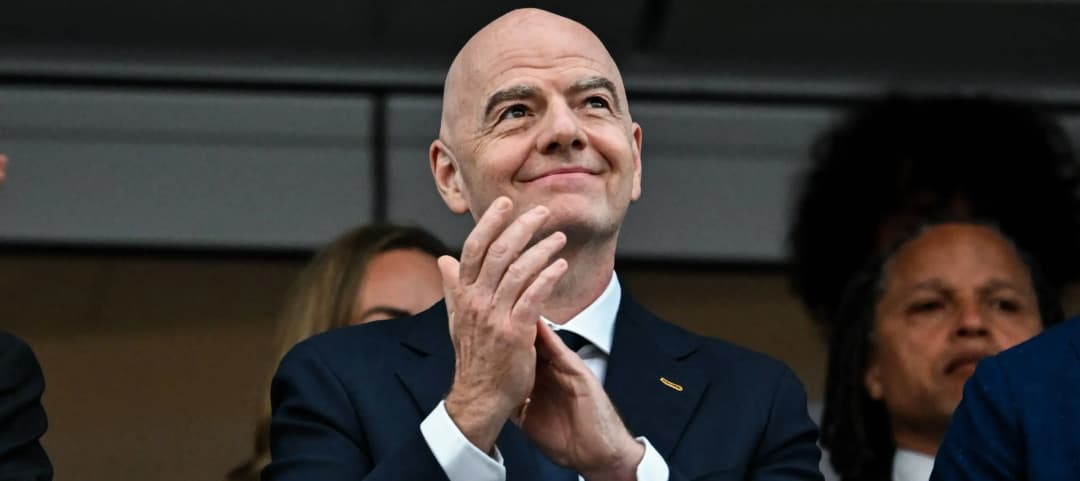
Despite mounting criticism over the Folarin Balogun controversy, FIFA President Gianni Infantino appears firmly on course for a fourth term in office, highlighting the gap between public outrage and political reality inside world football.
The controversy began after U.S. President Donald Trump publicly revealed that he had asked Infantino to review Balogun's red card during the FIFA World Cup. Hours later, FIFA postponed the enforcement of the striker's suspension under Article 27 of its Disciplinary Code, allowing him to play in the United States' Round of 16 match against Belgium.
The decision sparked an immediate backlash. Belgium protested, UEFA described the move as crossing a "red line," while figures including Jürgen Klopp and former FIFA president Sepp Blatter questioned the governing body's credibility. International media also portrayed the episode as an unprecedented example of political influence over World Cup disciplinary decisions.
Although Infantino insisted that FIFA's Disciplinary Committee operates independently and that he had no involvement in the ruling, the timing of events fueled widespread skepticism. For many observers, the issue extended far beyond a single disciplinary case, raising broader concerns about FIFA's institutional independence and the integrity of its decision-making process.
Yet the latest controversy is unlikely to threaten Infantino's position. Since taking office in 2016, he has weathered criticism over the expansion of the FIFA World Cup to 48 teams, the revamped FIFA Club World Cup, ticket pricing, and his increasingly centralized style of governance. None of those disputes has significantly weakened his political standing.
The key reason lies in FIFA's electoral structure. The organization's president is elected by its 211 member associations, each holding one vote regardless of footballing stature or financial influence. While Europe remains the sport's strongest commercial and competitive force, UEFA controls only 55 votes—far from enough to determine the outcome of a presidential election.
Infantino has instead built his political base across Africa, Asia, Concacaf, Oceania, and other regions. Expanding the World Cup has created more qualification opportunities for smaller nations, while FIFA's financial development programs have strengthened his support among member associations that have benefited directly from those initiatives.
Another factor working in Infantino's favor is the absence of a credible challenger. Despite persistent criticism from Europe and sections of the football community, no serious candidate has formally entered the race to oppose the incumbent, leaving his support network largely intact.
The Balogun affair has also revived accusations of double standards. FIFA has previously suspended several national associations over government interference in football, yet critics argue the governing body responded differently when political pressure appeared to come from the president of the World Cup host nation.
Ultimately, the controversy has become less about one player's suspension and more about FIFA's ability to demonstrate the independence of its institutions. Nevertheless, the current political landscape suggests that media scrutiny and public criticism alone are unlikely to prevent Infantino from securing another term. Within FIFA, presidential elections are decided by votes—not headlines—and, for now, his opponents lack both the numbers and a unifying alternative.